
When the Competition Ends: The Struggles of Aging Athletes
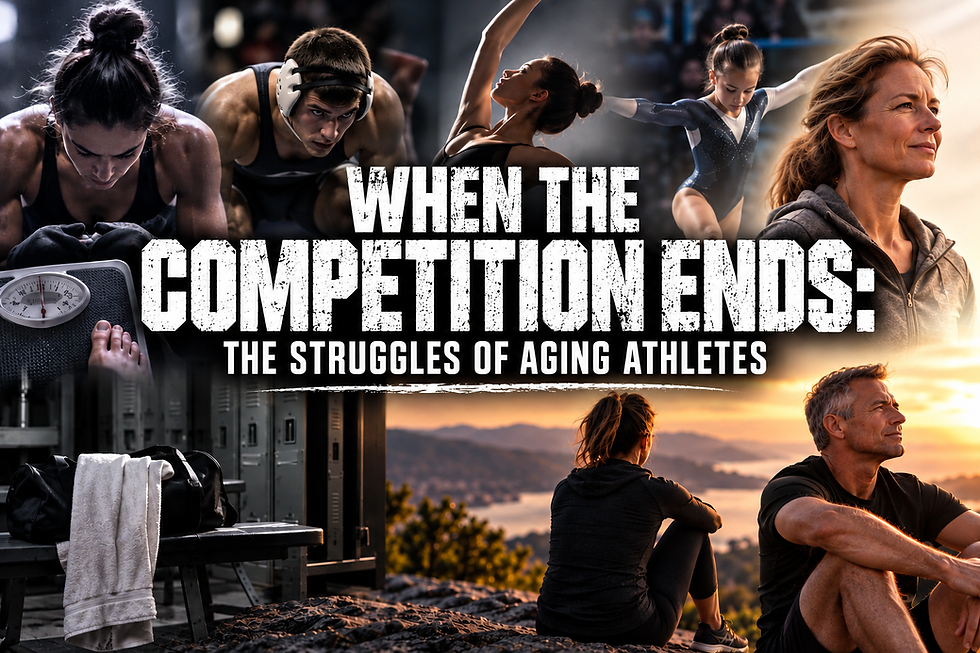
For some people, sports were just something they did growing up. For others, being an athlete was a huge part of who they were.
Years of practices, competitions, early mornings, injuries, strict diets, and sacrifices. Their schedules revolved around training, their social circles were often built around teammates, and their success was measured by how well they performed.
But eventually, for almost everyone, that chapter comes to an end.
Maybe it happens after high school or college. Maybe an injury forces them out. Maybe they simply get older and realize their competitive days are behind them.
What doesn’t necessarily end are the habits, expectations, and relationships they developed with their bodies during those years.
And for some former athletes, those things can become increasingly difficult to navigate as they get older.
When Your Sport Required You to Fight Your Own Body
Not every sport asks the same things of its athletes.
A football player might spend years trying to become as big and powerful as possible. A wrestler might spend an entire season manipulating their weight to compete in a particular class. Gymnasts, dancers, figure skaters, and athletes in other appearance-focused sports may experience tremendous pressure to maintain a certain body size or appearance.
Think about what that teaches someone, especially when they’re young.
A wrestler might spend years associating success with the number on a scale. Making weight becomes something to celebrate, even when the methods used to get there involve dehydration, excessive exercise, or severe food restriction.
A dancer or gymnast might learn that being smaller is somehow better, regardless of how strong, talented, or capable they actually are.
Some athletes are encouraged to eat enormous amounts of food to maintain their size, while others spend years being told to eat less.
These behaviors can become so normalized within competitive environments that athletes don’t always recognize how unhealthy some of them were until much later in life.
And then one day, the competition ends.
The weigh-ins stop. The coaches aren’t watching. There isn’t another tournament or performance coming up.
But the relationship with food and body weight that developed over all those years doesn’t automatically disappear.
Your Body Changes, but Your Expectations Don’t
One of the hardest adjustments for former athletes is accepting that their bodies are no longer going to respond the way they did at 18, 22, or even 30.
And that’s not necessarily because they’ve stopped taking care of themselves.
Their lives are different.
They may be working full-time, raising children, managing businesses, or dealing with responsibilities they never had when training was their primary focus.
Recovery can take longer. Old injuries start making themselves known. Muscle mass and conditioning can decline when training becomes less frequent, and changes in activity, sleep, and hormones can influence body composition.
Yet mentally, many former athletes are still comparing themselves to the person they were at their competitive peak.
A former wrestler who competed at 145 pounds might spend decades believing that’s what he’s supposed to weigh, even though his body and lifestyle are completely different now.
A former gymnast might struggle with gaining weight that would be entirely appropriate and healthy for her adult body.
And someone who spent years being praised for their strength or appearance may have a difficult time watching those things change.
The problem isn’t necessarily the physical changes themselves.
It’s the belief that those changes represent some kind of personal failure.
What Happens When You Lose Your Identity as an Athlete?
This is something I don’t think gets talked about nearly enough.
When you’ve spent most of your life identifying as an athlete, what happens when you’re no longer competing?
For years, you had a purpose that was easy to define. You were training for something. There was always another match, meet, competition, or performance on the calendar.
You knew what you were working toward and what you needed to do to get there.
Then suddenly, that structure is gone.
Some people adjust without much difficulty. Others struggle with a genuine loss of identity.
They miss the competition, the teammates, the routine, and the feeling of constantly working toward improvement.
They may also miss the recognition that came with being good at something.
For someone who was always known as the wrestler, the gymnast, the dancer, or the football player, it can be surprisingly difficult to figure out who they are without that title.
And sometimes that frustration gets directed toward their body.
They start training excessively because they feel guilty when they don’t. They become overly restrictive with food because gaining weight feels unacceptable. Or they go in the opposite direction, abandoning exercise altogether because working out without a competition to prepare for no longer feels meaningful.
Neither response is unusual, and neither means someone lacks discipline.
Sometimes it’s simply difficult to find a new relationship with something that once defined so much of your life.
The Emotional Side of Getting Older
There’s another part of this that I think deserves attention.
Former athletes often remember what their bodies used to be capable of.
They remember how fast they were, how much weight they could lift, how flexible they were, or how easily they could get through a demanding practice.
Those memories don’t disappear just because 20 years have passed.
And it can be frustrating when your mind still remembers being able to do something that your body can no longer perform the same way.
For some people, that creates a constant feeling of disappointment. They compare every workout to what they used to do, rather than appreciating what they’re capable of doing today.
There can also be a sense of grief that people don’t always recognize.
You’re not necessarily mourning the sport itself. You might be mourning the version of yourself who participated in it.
The friendships, the excitement, the confidence, the sense of belonging, and the feeling that your body could handle almost anything.
It’s possible to be proud of your athletic past while still feeling sad that it’s over.
And it’s possible to love exercise while struggling with the fact that it doesn’t feel the same anymore.
The Physical Price of Years of Competition
Of course, there are also very real physical consequences that can follow athletes into adulthood.
Years of repetitive movements, heavy training loads, injuries, and competing through pain can leave lasting effects.
Former athletes may deal with chronic joint discomfort, reduced mobility, lingering injuries, or limitations that make certain exercises more difficult.
Some athletes also carry the consequences of years of inadequate fueling, repeated dehydration, or extreme weight manipulation.
Depending on the sport, the individual, and the severity of those practices, these experiences may have affected bone health, hormonal function, recovery, and overall health.
Not every former athlete will experience these problems, but it’s important to recognize that the demands of competitive sports aren’t always compatible with long-term health.
Something that helped someone perform at a high level for a particular competition may not have been good for their body over the course of a lifetime.
And that distinction matters.
Learning How to Eat Without a Competition to Prepare For
This is an area where I see a lot of opportunity for former athletes to improve their quality of life.
For years, nutrition may have been treated as a tool for performance, weight management, or appearance.
Food wasn’t always about nourishment. It was about making weight, maintaining a certain physique, or supporting an intense training schedule.
Once the sport ends, those same eating habits may no longer make sense.
Someone who previously trained three hours a day probably doesn’t need to eat exactly the same way when they’re exercising four days a week for 45 minutes.
At the same time, someone who spent years restricting food to stay small may need to learn that eating enough to maintain muscle, support recovery, and feel good is far more important than chasing an old competition weight.
And this can be surprisingly difficult.
Athletes are often very good at following rules. Give them a training schedule or a specific nutrition target and they’ll follow it.
But learning to eat in a way that supports health, without the pressure of competition, requires a different mindset.
You can still have structure. You can still track your nutrition. You can still care about your body composition.
The difference is understanding that your nutritional needs today should be based on your current body, activity level, health, and goals.
Not what your coach expected from you 20 years ago.
Finding a New Reason to Train
One of the things I love about working with former athletes is that many of them already understand the value of hard work and consistency.
Those qualities don’t disappear when they stop competing.
But the reasons behind their training may need to change.
Maybe the goal now is to maintain muscle mass, improve cardiovascular health, or keep their joints moving comfortably.
Maybe it’s being able to play with their children, enjoy recreational sports, or continue doing physical activities they love as they get older.
And for some, having a new competitive outlet, whether that’s a recreational league, a martial art, a race, or a personal strength goal, can bring back some of the excitement they miss.
There’s nothing wrong with wanting to challenge yourself.
There’s also nothing wrong with realizing you don’t need to push yourself to the absolute limit anymore.
You can train hard without punishing yourself.
You can care about your appearance without feeling obligated to look like you did during your competitive years.
And you can be proud of your athletic accomplishments without spending the rest of your life trying to recreate them.
You’re Still an Athlete, Even if You Don’t Compete Anymore
I think one of the biggest mistakes former athletes make is believing that their best years are automatically behind them.
Your best competitive years might be.
But that doesn’t mean your best years of feeling healthy, strong, confident, or comfortable in your body are over.
They may just look different.
The discipline, resilience, and work ethic that helped you succeed in sports can still serve you incredibly well. The challenge is learning how to apply those qualities to the person you are today rather than the athlete you used to be.
For some people, that means adjusting their training. For others, it means rebuilding their relationship with food or finally addressing the emotional effects of years spent under pressure to perform or look a certain way.
And sometimes, it means accepting that you no longer have anything to prove.
You spent years asking your body to perform for your sport.
Maybe this next chapter should be about learning how to take care of it for yourself!


Comments